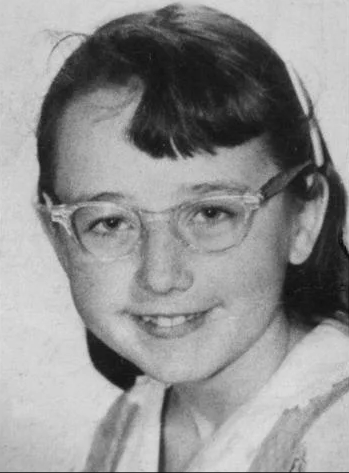
March 19, 1964: An Innocent Life Taken, a Mystery That Lasted Decades, and a DNA Breakthrough That Changed Everything
The murder of 12-year-old Mary Theresa Simpson of Elmira, New York, remained unsolved for more than 61 years. Now, thanks to advances in forensic science, investigative genealogy, and the determination of investigators who refused to give up, her family finally has answers.
Today, we’re telling the story of Mary Theresa Simpson, a 12-year-old girl whose life was taken in March 1964. Her murder shocked a community, generated thousands of pages of investigative records, and became one of the oldest homicide cases ever solved through forensic genetic genealogy.
But before we get to the science that finally identified her killer, we need to go back to Elmira, New York, in 1964.
Elmira, New York: A Different City in 1964
Elmira sits in New York’s Southern Tier, near the Pennsylvania border, along the Chemung River.
Today, Elmira has a population of approximately 26,500 people, according to the 2020 Census. But in 1960, just four years before Mary’s murder, the city had a population of approximately 46,517.
That’s a substantial difference. Elmira was a much larger and busier industrial city than the one we know today.
Manufacturing played a significant role in the local economy. Companies such as Remington Rand, known for its typewriters and other office equipment, and American LaFrance, known for manufacturing fire engines, were associated with the area. Railroads had also played an important role in Elmira’s development.
Elmira also has a famous literary connection. Author Mark Twain spent many summers in the area, wrote portions of his work at Quarry Farm, and is buried at Woodlawn Cemetery.
This was the community where Mary was born, raised, and ultimately disappeared.
Who Was Mary Theresa Simpson?
Mary Theresa Simpson was just 12 years old.
She was the daughter of Ellsworth Simpson and Rose Simpson. She had an older brother, an older sister named Linda, and an older half-brother.
Mary was described as a shy, quiet girl. She was also active in her community. She belonged to the Girl Scouts, participated in activities at the Neighborhood House, was involved with the YWCA, and attended Volunteers of America programs.
She was a good cook, too. In fact, she had even won a trophy for her cooking.
Mary attended St. Patrick’s School in Elmira before moving away with her father. When she returned to the city, she was attending a different school.
Her family circumstances had changed considerably in the year leading up to her murder.
In May 1963, her parents separated, and Mary went to live with her father. Later that year, Ellsworth moved with Mary to nearby Hammondsport, meaning her mother only saw her approximately once a month.
In early March 1964, Ellsworth found a new job in Elmira, and the two moved back to the city.
They had been back for only about a week when Mary disappeared.
Her older sister Linda was living in Buffalo at the time, and other family members were also living away from home.
Mary was starting over in a familiar city, reconnecting with family and settling into a new routine.
She was 12 years old. She should have had many more years ahead of her.
Sunday, March 15, 1964: The Disappearance
Sunday, March 15, 1964, started like an ordinary day.
Accounts of the investigation place Mary leaving her father’s apartment during the afternoon. She told him she was going to visit her cousin.
Later, Mary was visiting relatives at the home of her aunt, Alice Bowman.
At approximately 6 p.m., Mary told her aunt that she needed to get home.
Two of her cousins, who were around Mary’s age, walked with her up Market Street toward the corner of Harriet Street.
It was a walk of approximately a mile from Mary’s home.
And remember, this was 1964. It wasn’t unusual for a 12-year-old girl to be walking around her neighborhood by herself.
Even in the early 1980s, when I was growing up in Schenectady, it wasn’t unusual for kids to be out walking around the neighborhood without an adult accompanying them.
When the group reached the corner, Mary told her cousins she had better get home.
It was approximately 6:40 p.m.
Mary reportedly told her aunt that her father was a little strict about her being home on time and that he might spank her if she was late.
The Bowmans turned around and headed back home. Mary continued walking toward her father’s apartment.
She was wearing:
A reversible hooded jacket, blue on one side and blue flowers on the other.
A green skirt.
Capri-length jeans underneath.
Black sneakers.
A white purse.
That was the last confirmed sighting of Mary alive.
At approximately 10 p.m., Ellsworth Simpson walked into the Elmira Police Department and reported his daughter missing.
A search began.
The Search for Mary
Police immediately began looking for the missing 12-year-old.
Investigators searched abandoned and vacant buildings, used-car lots, junkyards, construction sites, and other locations where someone might have hidden a body.
They also searched along the banks of the Chemung River and Newtown Creek.
Police departments throughout New York and neighboring Pennsylvania were notified and asked to keep an eye out for Mary.
Despite the searches, there was no sign of her.
Then, four days after she disappeared, everything changed.
March 19, 1964: A Horrific Discovery
At approximately 4:30 p.m. on Thursday, March 19, Joseph Gessie was hiking with his two sons, Larry, 11, and Joseph, 8.
They were walking in an area south of their home known as Coombs Hill.
One of the boys noticed a pile of rocks that looked as though someone might have been building a small shack.
As the family looked closer, they noticed something horrifying.
Hands and feet were sticking out from underneath the rocks.
They had discovered Mary’s body.
She was lying on her back, with four large rocks placed over her body. Sticks, leaves, and other debris had been piled on top in an attempt to conceal her.
The Chemung County medical examiner determined that Mary had been strangled. Her mouth had been stuffed with dirt and twigs, and there was evidence of sexual assault.
The location where Mary was discovered was a wooded area known for logging and illegal dumping. At the time, not everyone had the trash collection services we take for granted today, and dumping in wooded areas was not uncommon.
Investigators believed whoever left Mary’s body there was likely familiar with the area.
Police later indicated that if the Gessie family hadn’t stumbled across her remains, Mary might have remained hidden for a considerable amount of time.
The weather certainly didn’t help.
It was March in Upstate New York. Anyone familiar with the region knows what that means: mud season.
The dirt roads and wooded terrain could be extremely difficult to navigate, particularly during the winter and early spring.
The discovery transformed a missing-person investigation into a homicide investigation.
And for Mary’s family, the nightmare was only beginning.
A Murder Without an Arrest
Investigators conducted hundreds of interviews and followed up on leads throughout the years.
A reward fund eventually grew to $5,000 by 1972.
But nobody was arrested.
The investigation eventually went cold.
For decades, Mary’s murder remained one of Elmira’s most troubling unsolved cases.
Then came DNA technology.
The First DNA Breakthrough
In the early 2000s, forensic scientists at the New York State Police laboratory were able to identify biological evidence on Mary’s clothing.
A DNA profile was developed from semen recovered during the original investigation.
The profile was submitted to CODIS, the Combined DNA Index System, the national DNA database maintained by the FBI.
There was no match.
The profile was submitted again in 2014.
Still nothing.
It’s important to understand the limitations of the technology available at the time.
CODIS became fully operational in 1998. Although it has grown considerably over the years, it relies on DNA profiles available in its various databases. If the person responsible has never provided a qualifying DNA sample or their profile isn’t represented in the system, a search may produce no match.
And that’s exactly what happened here.
The evidence existed. Investigators had a DNA profile.
But they didn’t know whose DNA it was.
For years, that profile sat without providing an answer.
Until forensic science advanced again.
Investigative Genetic Genealogy: The Technology That Changed Everything
The major turning point came in 2022.
Elmira Police Sergeant William Goodwin secured a grant from the nonprofit organization Season of Justice to help fund advanced forensic testing.
Goodwin was instrumental in moving the investigation forward. He researched the case, pursued funding, and worked to bring together the organizations and resources needed to revisit the evidence.
The investigation involved the FBI, forensic DNA laboratory Othram, and students from Russell Sage College’s Criminal Investigation Resource Center.
The process involved investigative genetic genealogy.
Unlike a traditional CODIS search, which looks for matching DNA profiles in law enforcement databases, investigative genetic genealogy can use genetic information to identify potential relatives of an unknown individual.
Investigators can then build family trees, narrow down possible family connections, and identify individuals who may be related to the person responsible.
In Mary’s case, the DNA sample was incredibly small.
According to the National Center for Missing & Exploited Children, investigators were working with approximately 0.4 nanograms of DNA.
That’s an almost unbelievably small amount.
The forensic work helped investigators construct a family tree and identify a potential relative.
A son of the suspected individual agreed to voluntarily provide a DNA sample.
That sample helped investigators establish the family connection.
But there was still one major problem.
The person they needed to identify was dead.
And before they could get to that final answer, something almost went terribly wrong.
The DNA That Almost Never Made It to Texas
This part of the investigation sounds like something out of a movie.
In February 2023, FBI Special Agent Kenneth Jensen was assisting the Elmira Police Department with the case.
He understood that the tiny DNA sample represented what might be the last opportunity to solve Mary’s murder.
The evidence needed to be shipped to Othram’s laboratory in Texas for additional forensic testing.
To protect it, Jensen packed the fragile evidence in a cooler with dry ice.
The package was routed through Memphis, Tennessee, home to the enormous FedEx shipping hub.
Then an ice storm hit.
The storm disrupted operations at the Memphis hub, leaving the package stranded.
And this wasn’t an ordinary shipment.
If the dry ice ran out and the evidence wasn’t properly preserved, investigators could lose their last opportunity to identify Mary’s killer.
Jensen couldn’t get anyone at FedEx to provide answers during the historic storm.
He later described being terrified that his decision to ship the evidence through FedEx might ultimately destroy the only remaining opportunity to solve the case.
So he contacted fellow FBI agents in Memphis.
Fortunately, the bureau had a liaison at the FedEx facility.
The agent began searching for the package.
Sergeant Goodwin later described it as a massive scavenger hunt.
Eventually, the package was located.
The FBI agent placed the evidence in the bureau’s freezer until the storm passed. Once shipping operations resumed, the evidence continued its journey to Texas.
After more than six decades, the evidence had survived another obstacle.
Now the science could continue.
This entire episode is documented in a fascinating article published by the National Center for Missing & Exploited Children:
How the Oldest Case Ever Solved with DNA Almost Didn’t Happen – NCMEC
The Man Behind the DNA
The genetic investigation eventually pointed to Alfred Raymond Murray Jr.
Murray was born and raised in Elmira. He worked as a truck driver and was a Korean War-era military veteran.
He was 32 years old when Mary was murdered.
He died in 2004, at the age of 72.
Interestingly, Murray had never been identified as a suspect during the original investigation. His name did not appear among the thousands of pages of investigative records reviewed by investigators.
There was no established connection between Murray and Mary or her family.
Investigators had not previously identified a relationship between them.
The evidence ultimately pointed to him through the DNA and genealogical investigation.
November 2025: The Exhumation
There was one final step.
Because Murray was deceased, investigators needed to obtain a direct DNA comparison.
In November 2025, authorities exhumed his remains.
The DNA recovered from Murray was compared with the biological evidence preserved from Mary’s clothing.
The results were extraordinary.
The DNA matched.
According to the findings presented by investigators, the odds of the DNA belonging to someone else were less than one in 320 billion.
After more than six decades, investigators had identified the man responsible.
February 10, 2026: Justice After 61 Years
On February 10, 2026, the Elmira Police Department held a news conference announcing that the murder of Mary Theresa Simpson had been solved.
Her older sister, Linda Galpin, who was 78 at the time, attended the announcement along with other family members.
For Linda, the news brought a mixture of relief and sadness.
She was grateful that the mystery had finally been resolved, but she wished their mother had lived long enough to hear the news.
Their mother had been pregnant with Mary’s younger sister at the time of the murder.
Imagine carrying that unanswered question for more than 61 years.
Imagine growing older, watching decades pass, and never knowing exactly who took your little sister’s life.
Linda finally had an answer.
You can watch the February 10, 2026, announcement here:
Elmira Police Department – Mary Theresa Simpson Case Press Conference
Officials have described the case as the oldest homicide investigation, if not the oldest, to be solved using forensic genetic genealogy.
It was also reported as the 18th case in New York State solved with assistance from Othram.
Who Was Alfred Raymond Murray Jr.?
One of the more disturbing aspects of this case is what investigators have learned about Murray’s history.
According to information discussed by investigators and historical reporting, Murray had prior encounters with law enforcement involving offenses against children.
The National Center for Missing & Exploited Children also reported historical arrests involving allegations of child molestation when Murray was a teenager.
However, there is an important distinction here: we cannot establish that every allegation or suspected offense attributed to him was proven, nor can we assume that he committed other crimes simply because he was identified in Mary’s murder.
What we do know is that he was not a stranger to law enforcement, yet his name never emerged as a suspect in Mary’s original investigation.
There is also no established evidence that Murray knew Mary or her family.
Investigators have not established a personal relationship between them.
One possible explanation is that Mary was the victim of a crime of opportunity. She was walking home alone, and the person responsible may have noticed her and targeted her.
But that remains a theory. We don’t know exactly how Murray encountered Mary or what happened during those final moments.
What we do know is that a 12-year-old girl never made it home.
And the man responsible went on to live another 40 years without being held accountable for her murder.
Russell Sage College: Students Helping Solve Cold Cases
There is another important piece of this story that deserves attention, particularly for those of us here in the Capital Region.
Russell Sage College, located in Troy, New York, has a Criminal Investigation Resource Center (CIRC).
Directed by Dr. Christina Lane, the center gives students hands-on experience working with law enforcement agencies on unresolved criminal investigations.
Students assist with reviewing investigative records, organizing and digitizing documents, examining forensic information, and identifying potential investigative leads.
This isn’t simply a classroom exercise. Students are working with actual cold-case investigations.
We’ve discussed Russell Sage’s work before on the podcast.
Students associated with the Criminal Investigation Resource Center have assisted with several cases we’ve featured, including the murder of Catherine Blackburn.
And now, the Mary Theresa Simpson investigation.
The students’ work helped Elmira investigators organize and review thousands of pages of records, providing a fresh look at a case that had remained unsolved for generations.
It’s an excellent example of how colleges and universities can contribute to real-world criminal investigations while giving students valuable experience.
You can read more about the program and its involvement in Mary’s case here:
Russell Sage College – Criminal Investigation Resource Center Credited in Solving 1964 Homicide
Othram: The Future of Cold Case Investigations?
We also have to talk about Othram.
Based in The Woodlands, Texas, Othram is a forensic laboratory specializing in advanced DNA testing and forensic genetic genealogy.
The company has helped law enforcement agencies across the country identify suspects and victims in cases that had remained unresolved for decades.
The technology is fascinating, and it naturally raises a question:
If this technology can solve a 61-year-old murder, why isn’t every cold case being sent to Othram?
There are several reasons.
First, cost. Advanced forensic DNA testing and genetic genealogy can be expensive. Many local police departments simply don’t have the resources to pursue this type of testing for every unsolved case.
That’s why grants from organizations like Season of Justice can be so important.
Second, not every case has usable DNA.
Remember, DNA technology didn’t exist in 1964. The officers investigating Mary’s murder were preserving evidence without knowing that decades later scientists would be able to extract an individual’s genetic profile from a microscopic biological sample.
Some evidence was stored under less-than-ideal conditions. Some samples have deteriorated. Others may have been contaminated or consumed by previous testing.
And sometimes, there is so little material that investigators effectively have one opportunity to get the testing right.
The Mary Simpson case demonstrates what is possible when evidence is preserved, funding becomes available, and investigators have access to the right technology.
But it also demonstrates how easily a case can remain unsolved when even one of those pieces is missing.
A Book About Mary’s Case
There is also a book about Mary’s murder and other cases from the Chemung County area.
Released in September 2025, shortly before the DNA breakthrough became public, the book is titled:
What Happened to Me?: Exploring the Mary Theresa Simpson Cold Case
It was written by Christina Fanelli and explores the investigation and the unanswered questions surrounding Mary’s murder.
Given the eventual identification of Murray, the book provides another way to explore the history of a case that has now reached an extraordinary conclusion.
Final Thoughts: DNA Doesn’t Solve Cold Cases by Itself
One of the things we see again and again in cold-case investigations is that they aren’t solved by DNA alone.
They’re solved because somebody did the work.
Somebody investigated that crime in the first place. Somebody collected evidence. Somebody documented what happened. And somebody, years or even decades later, decided that this victim still deserved answers.
Mary’s case is such a powerful example of that.
In 1964, investigators had to work with the tools and technology available to them. They couldn’t have imagined the forensic capabilities we have today.
But the evidence they recovered, and the investigative work they did, gave future investigators something to work with.
Decades later, other investigators picked up that work and kept going.
Different people. Different generations. Entirely different technology.
But the same goal.
Find out who killed Mary Theresa Simpson.
We should also recognize Sergeant William Goodwin, who pursued the funding and pushed to reopen the investigation; FBI Special Agent Kenneth Jensen, who helped protect and transport the fragile evidence; the forensic specialists at Othram; the investigators involved in the exhumation and DNA comparison; and the students and faculty at Russell Sage College.
And perhaps most importantly, we should remember Mary.
She wasn’t a cold case number. She wasn’t just a DNA profile or a collection of old newspaper articles.
She was a 12-year-old girl who liked cooking, belonged to the Girl Scouts, participated in community activities, and was afraid of the dark.
She had a family who loved her.
She had a future that was taken away.
For more than 61 years, her family lived without knowing who was responsible.
Now they have an answer.
And while no announcement, DNA test, or press conference can give Mary her life back, it can finally give her family something they had waited generations to receive.
The truth.
And that’s why we keep talking about these cases. Because even when decades pass, victims deserve to be remembered, families deserve answers, and the people responsible deserve to be identified.
Mary Theresa Simpson was finally given her name back as more than an unsolved murder victim.
She was remembered.